
Negin Mahzoun: The Hidden Geometry of Traces
November 6, 2026 - January 9, 2027
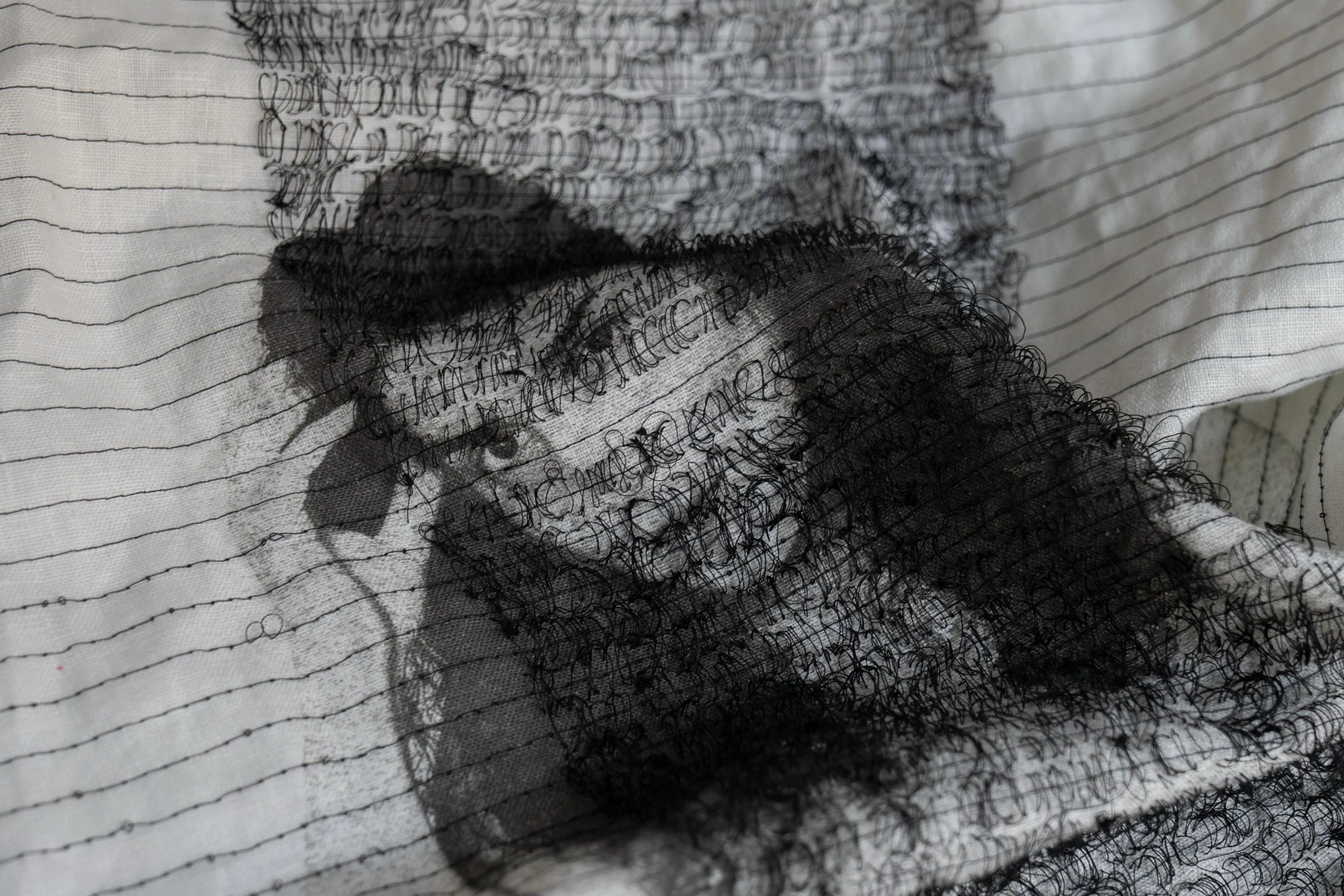
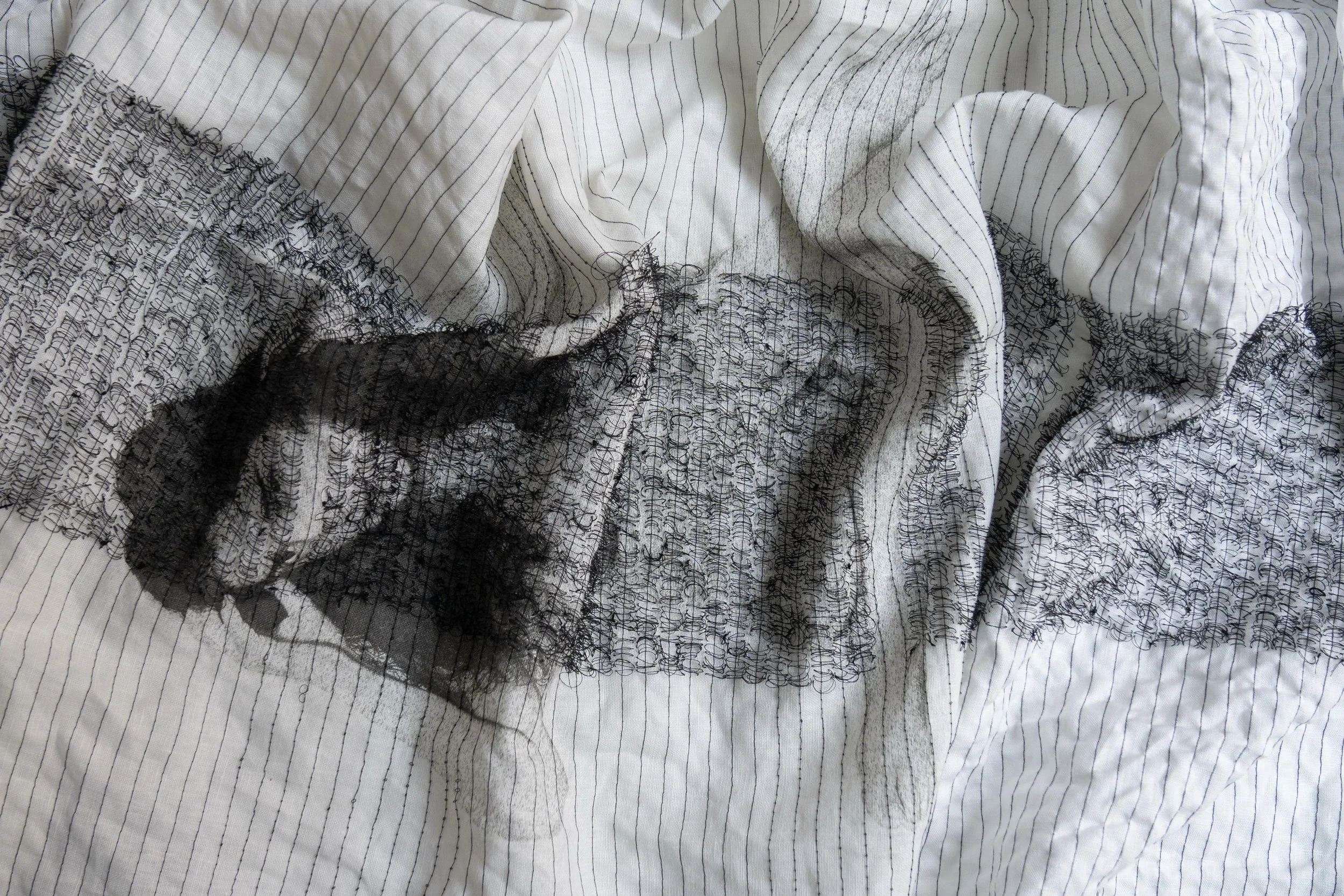
Nunu Fine Art New York is pleased to announce the next installment in our PROJECT SPACE: ASIAN VOICES series, Negin Mahzoun: The Hidden Geometry of Traces, opening November 6, 2026. This exhibition will showcase a new installation that builds upon Mahzoun’s established mixed-media photography and textile practice, exploring how material can embody memory, experience, and emotion.
Working at the intersection of photography, textile, and sculptural installation, Mahzoun’s practice investigates how images and bodies are shaped, altered, and reconstituted through time-based material processes. The artist begins many of her pieces by printing a photograph of her own body onto fabric, a self-portrait she views as a mutable subject rather than a fixed representation. Treating the image as a basis for the repetitive, meticulous process of hand-sewing, she obscures her own image with rows of loose stitches that parade across the surface. Hoping to disrupt the “promise of permanence” implied by photography, Mahzoun transforms the self-portrait into a sight of negotiation where visibility and erasure coexist.
The Hidden Geometry of Traces will explore memory as a material condition, depicting the body as a place where lived experience accumulates beyond knowledge and language. Gesture, rhythm, and sensation remain held within the body long after events have passed, shaping us in subtle ways. Mahzoun aims to articulate these emotive traces through her stitching, examining how the fabrics she handles respond to her gestures. Here the needle, with its repeated incisions of the textile’s surface, simultaneously heals and punctures, repairs and destroys. Fascinated by this tension, she likens sewing to listening, sitting with what the body carries without resisting its anachronisms.
The final product of Mahzoun’s handiwork consists of a long, scroll-like swath of fabric upon which several self-portraits of the artist are punctuated with precise lines and loose loops constructed out of a black thread that recalls human hair. Like many of her previous works, it resists narrative and clean resolution, instead allowing the viewer to make their own observations on the piece’s labor and attention. By defying conclusion, the work claims agency in understanding that everything cannot be overcome.