Rona Pondick’s "Pine Marten" Acquired by the Addison Gallery of American Art

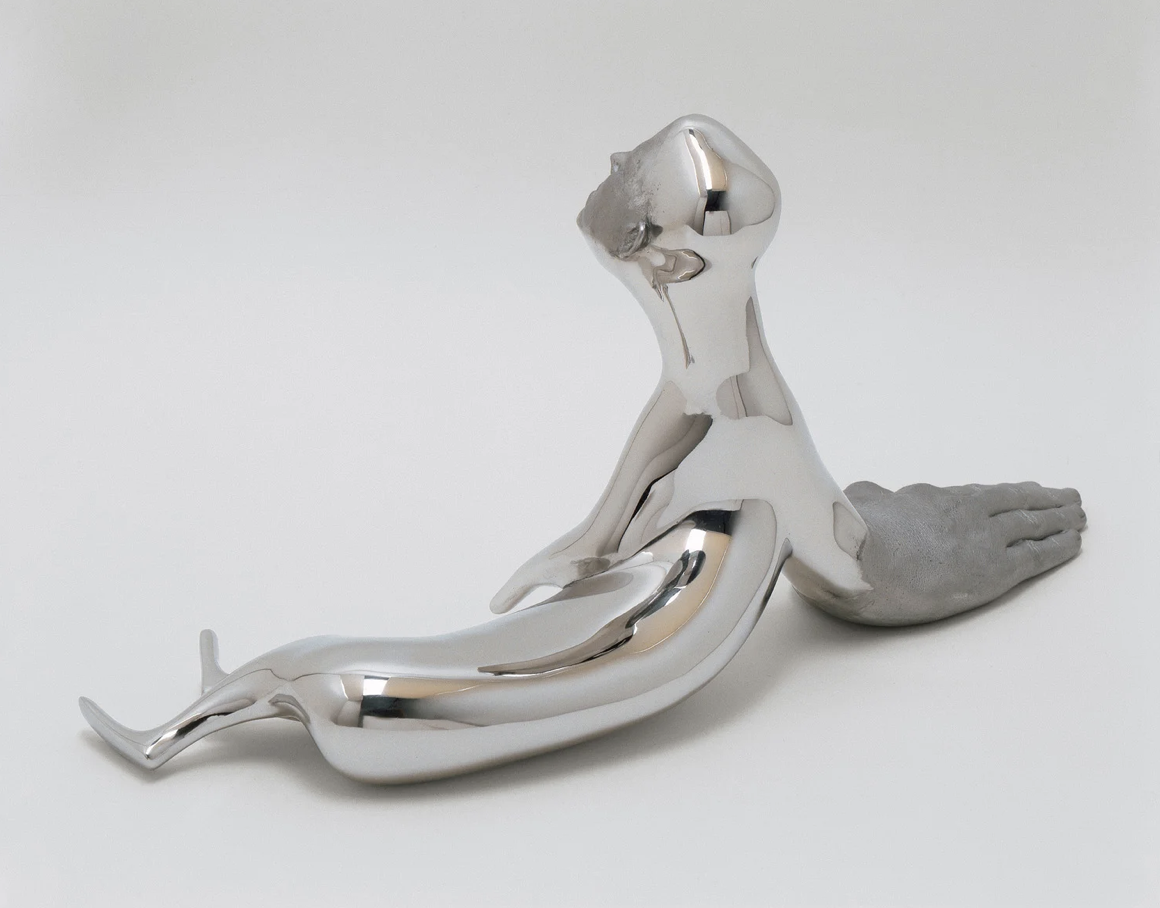
Rona Pondick, Pine Marten, 2000–01, stainless steel, edition of 6 + 1 AP, 9 x 18 7/8 x 6 3/4 in; 22.86 x 47.94 x 17.14 cm

Rona Pondick’s Pine Marten (2000–01) has entered the permanent collection of the Addison Gallery of American Art at Phillips Academy in Andover, Massachusetts. Founded in 1931, the Addison holds a collection of more than 29,000 works spanning American art from the eighteenth century to the present.

Cast in stainless steel, Pine Marten combines casts of the artist’s head and hand with an animal form, creating an uncanny hybrid that unsettles distinctions between human and animal. Its highly polished surface reflects the viewer and surrounding environment, drawing them into the sculpture’s exploration of bodily transformation and unstable identity. The work belongs to Pondick’s series of animal-human hybrids, which she began developing in the late 1990s.

Since its creation, Pine Marten has appeared in numerous exhibitions across the United States and Europe, including presentations at Sonnabend Gallery, Galerie Thaddaeus Ropac, the Galleria d’Arte Moderna in Bologna, the Groninger Museum, Cranbrook Art Museum, and the Worcester Art Museum.

Caroline Monnet Featured in "Sovereign Stitches + Wild Weaves" at the McCord Stewart Museum

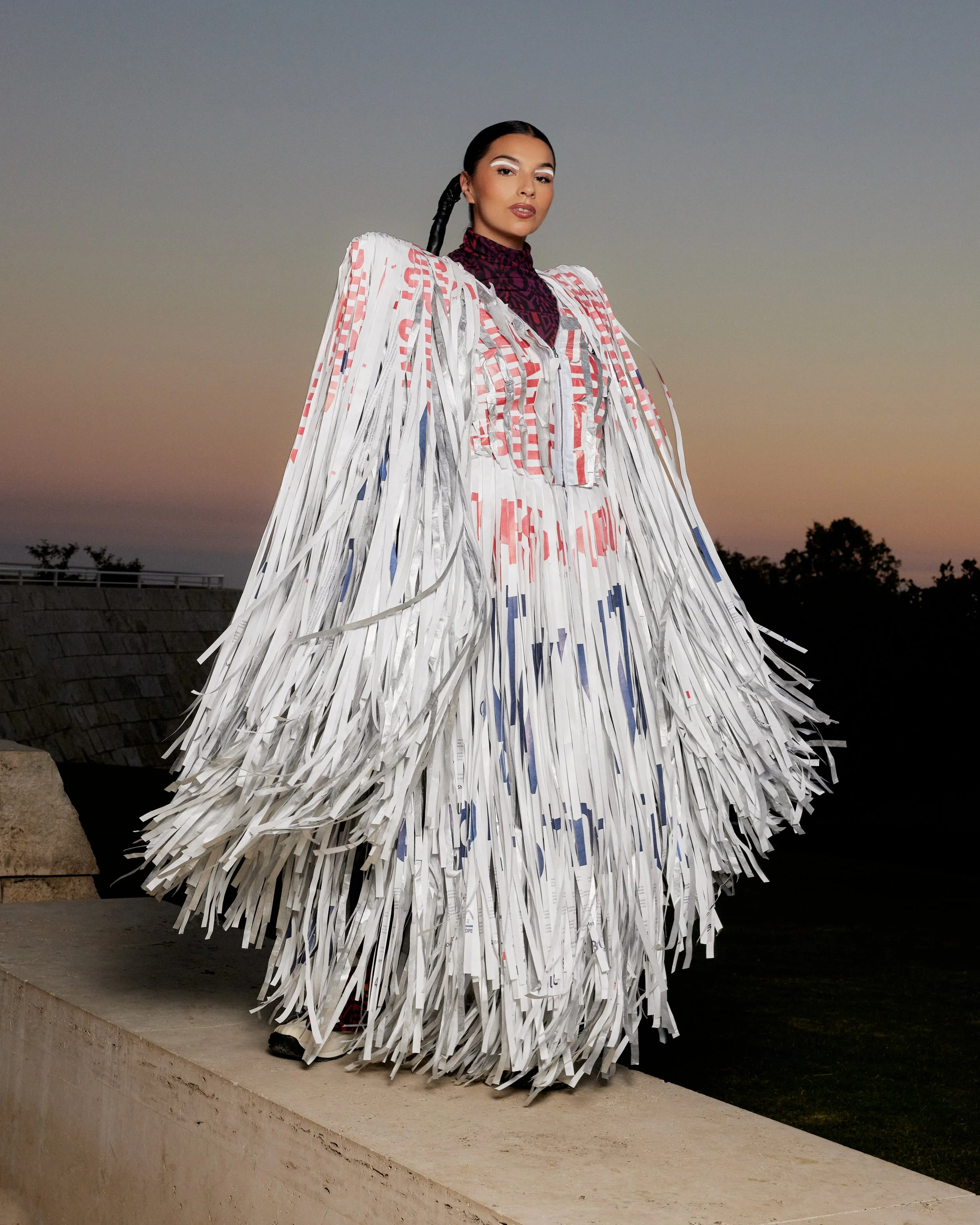
Caroline Monnet, Elisapie, 2023, PAR-AIR membrane, polyester, 68 x 23 x 7 in; 172.7 x 58.4 x 17.8 cm

We are delighted to share that Caroline Monnet will be featured in Sovereign Stitches + Wild Weaves, opening November 26 at the McCord Stewart Museum in Montreal. Curated by Wanda Nanibush and Sage Paul, the exhibition brings together nearly 40 Indigenous artists from more than 30 Nations whose practices challenge the boundaries between contemporary art, culture, fashion, design, and customary practices. Organized around eight themes, the exhibition explores embodiment, adornment, storytelling, activism, conservation, and the central role of creation in sustaining kinship and building ancestral futures.

Monnet’s participation reflects her ongoing exploration of Indigenous identity, cultural continuity, and futurity. Rooted in her Anishinaabe and French ancestry, her multidisciplinary practice transforms industrial building materials through Indigenous approaches to making, bringing garment forms and inherited visual languages into dialogue with contemporary systems of construction. Through these unexpected combinations of material and form, Monnet considers how ancestral knowledge can be carried forward and reimagined for future generations.

Sovereign Stitches + Wild Weaves
Venue | McCord Stewart Museum, Montreal, Canada
Dates | November 26, 2026 – September 6, 2027

Jill Downen Included in "Outside : Inside" at The Museum of Kansas City

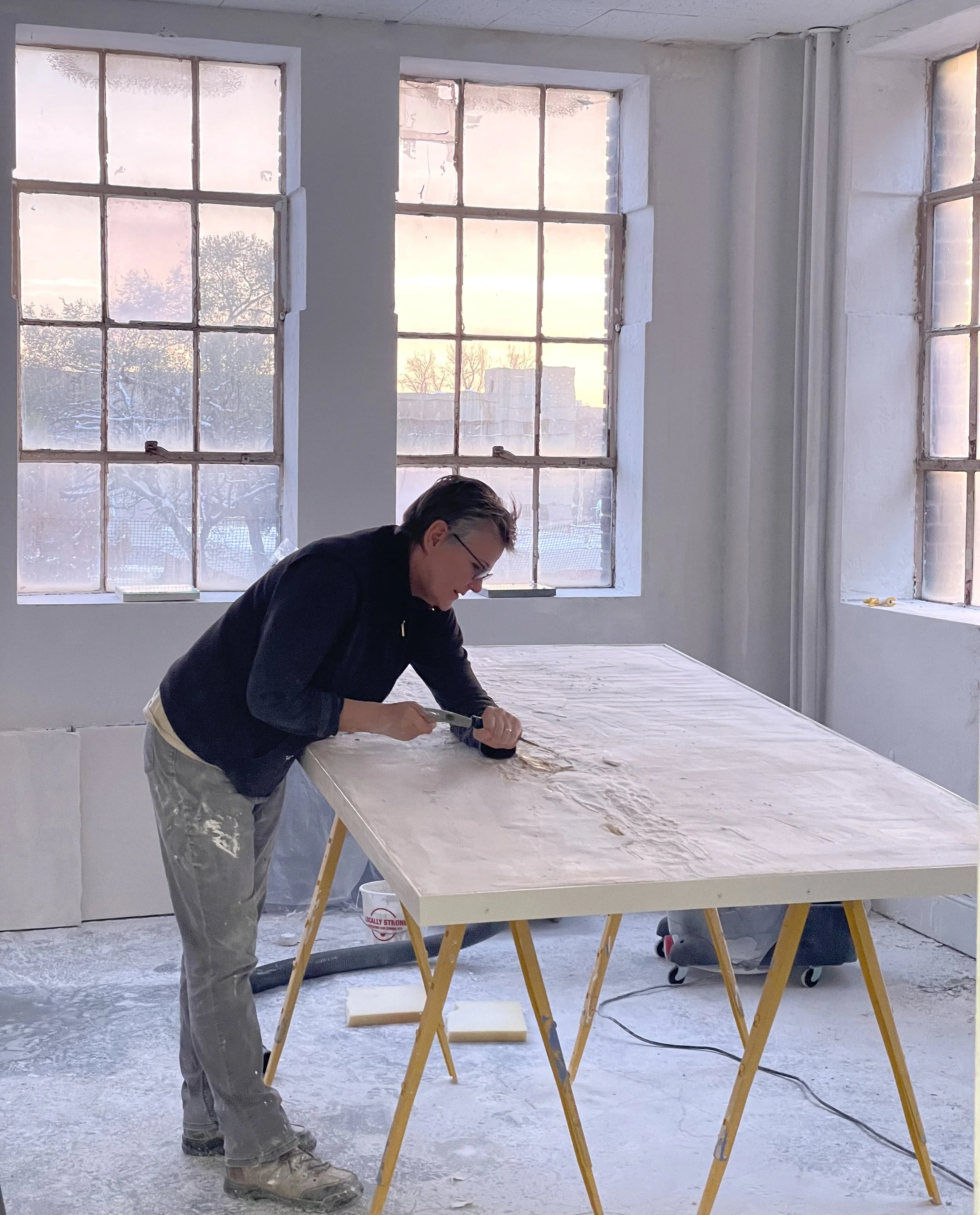
Jill Downen working in their studio.

We are thrilled to share that Jill Downen is included in Outside: Inside at The Museum of Kansas City. Curated by art collector and patron Dwight Smith and organized in collaboration with the Smith Family Foundation, the exhibition brings together contemporary sculpture by seven Kansas City–based artists.

Working across site-responsive installation, sculpture, and drawing, Downen investigates the relationship between the human body and architecture. A lightning strike to their family home during their formative years heightened their awareness of the body, built space, and temporality—concerns that continue to shape their practice. Through materials including concrete, plaster, wood, metal, gold leaf, and lapis lazuli, Downen creates spatial encounters that engage perception and the physical experience of place.

Rona Pondick’s "Lead Bed" Acquired by the McNay Art Museum

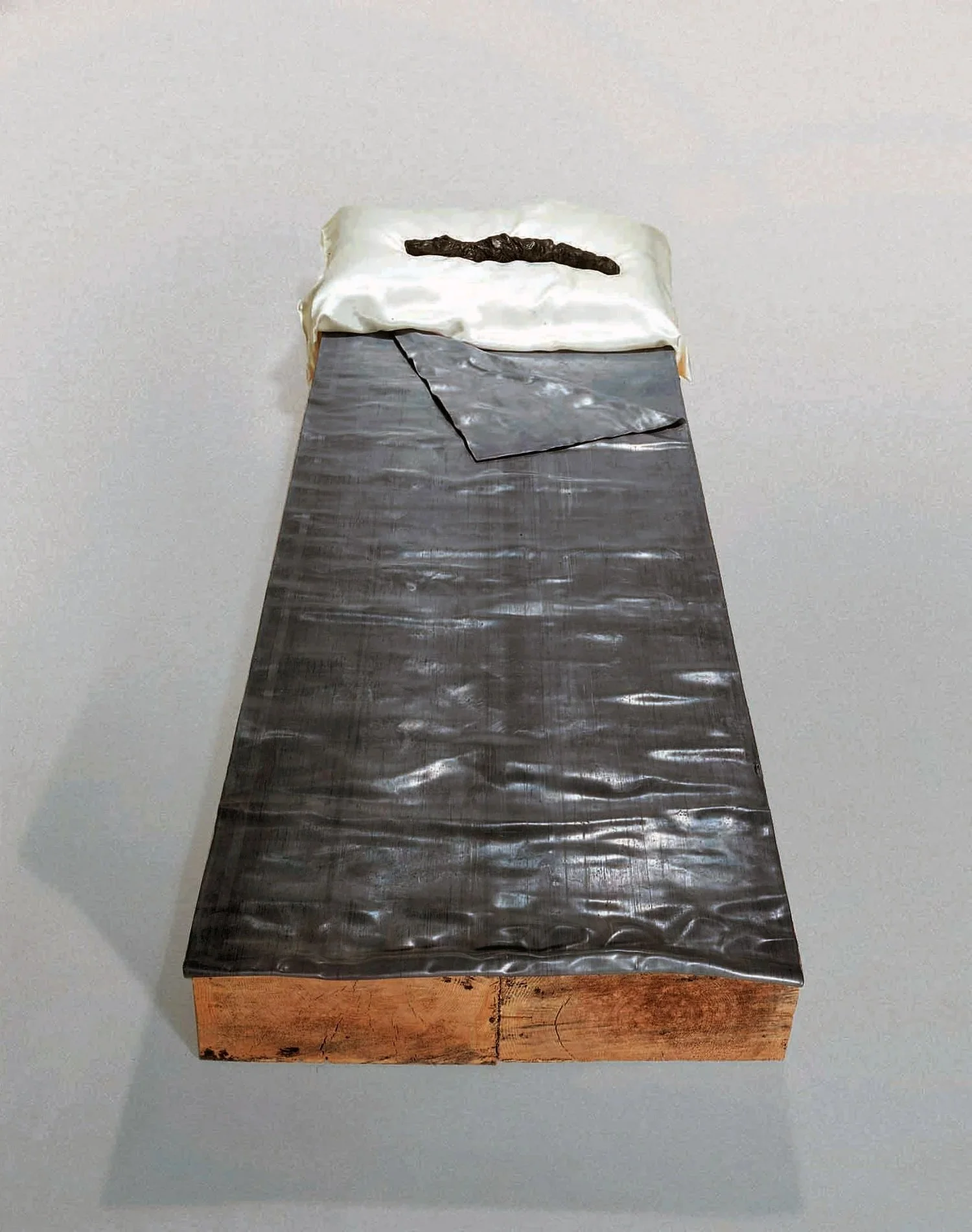
Rona Pondick, Lead Bed, 1987-88, wood, bronze, lead, and satin pillow, 11 x 24 1/2 x 72 1/2 in | 27.94 x 62.23 x 184.15 cm

Nunu Fine Art is pleased to announce that Rona Pondick’s “Lead Bed” (1987-88) has been acquired by the McNay Art Museum. 
 
In this work, somewhere between sculpture and assemblage, a sheet of flattened lead sits folded atop two planks of wood, folded inwards at its top right corner. The addition of a pillow with a white satin case on one end of this otherwise unassuming construction places it in a recognizable context, allowing the viewer to identify the everyday object lent by its title. The surface of the metal sheet is uneven, giving the impression that it was placed onto the wooden planks below it with ease, in the haste of an early morning. The fold in its corner acts as an invitation to climb inside for a moment of respite. Disrupting the bed’s inviting quality is an oblong object laid atop the satin pillowcase, an unidentifiable scrap of gnarled brass. “Lead Bed” is an early example of Pondick’s engagement with the uncanny and psychologically charged in her work, qualities that she would later explore through use of bodily fragments such as shoes, teeth, and even casts of her own head. 
 
Rona Pondick was born in Brooklyn, NY in 1952 and gained an MFA from Yale University in 1977. She was recently featured in "Bellmer Nauman Pondick: Material Desire," an exhibition at Nunu Fine Art New York which placed a selection of her sculptures in conversation with Hans Bellmer’s vintage photographs and Bruce Nauman’s early video works. In addition, the artist’s work is included in the collections of 52 institutions worldwide, including the Whitney Museum of American Art and the Metropolitan Museum of Art in New York City and Centre Pompidou in Paris, among others. 

Ari Bayuaji Presents First Canadian Museum Solo Exhibition “Rivière de perles”

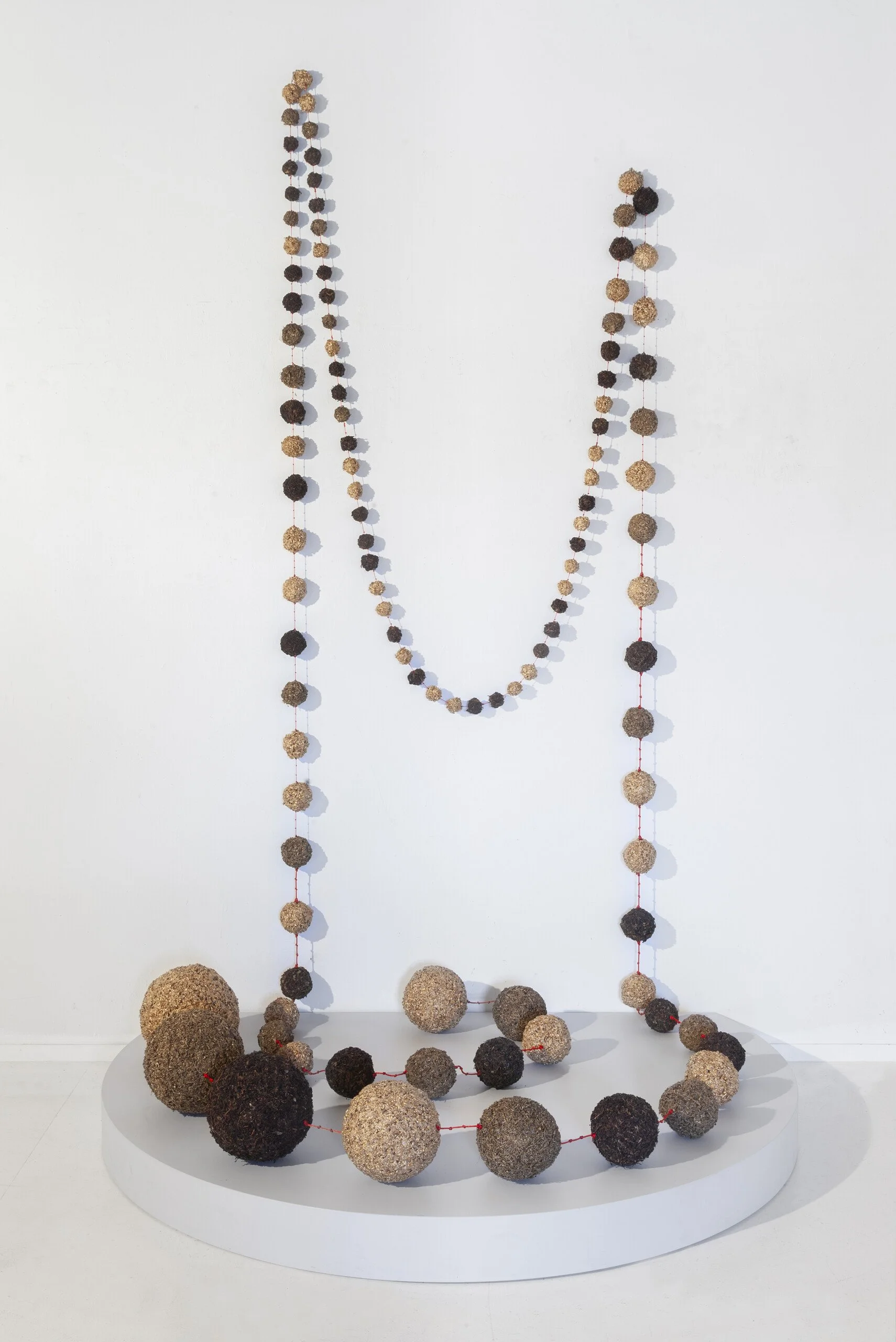
Installation view of Rivière de perles (Pearl River), courtesy of the artist.

Indonesian-Canadian artist Ari Bayuaji presents his first solo museum exhibition in Canada, Rivière de perles (Pearl River), at the Musée d'art contemporain de Baie-Saint-Paul, Quebec. Curated by guest curator Sylvie Lacerte, the exhibition brings together woven works, sculptures, and immersive installations developed from Bayuaji’s ongoing project of collecting and transforming discarded fishing nets and plastic materials gathered along coastlines. 

Installed throughout the museum’s main gallery as a suspended garden, the works evoke organic forms such as lichens, mosses, and plant growth, creating a subtle environment shaped by light and movement. Through these material transformations, Bayuaji explores ecological concerns, cycles of renewal, and the possibilities of reimagining discarded materials. 

Drawing from his long-term engagement with environmental issues and material reuse, Rivière de perles reflects the artist’s continued investigation into the relationship between human activity, natural ecosystems, and the potential for regeneration through artistic practice. 

Yu-Wen Wu Receives 2026 Wagner Arts Fellowship and Presents New Museum Commission

Yu-Wen Wu, Recitations II, 2026. Gilded, natural, painted tea, red thread. 108 x 50 x 49 in. Image by Will Howcroft, courtesy the artist.

Yu-Wen Wu is featured alongside Tomashi Jackson and Lucy Kim in 2026 Wagner Arts Fellows: Tomashi Jackson, Lucy Kim, and Yu-Wen Wu, on view at Wagner Gallery in Cambridge, Massachusetts, through December 2, 2026. All three artists were selected as 2026 Wagner Arts Fellows. 

The exhibition brings together three Greater Boston artists whose material-driven, research-based practices examine the social, technological, and political conditions shaping contemporary life. Wu’s interdisciplinary practice draws on her experience of migration to explore the intersections of art, science, the natural world, and social and cultural issues. Working across large-scale drawing, site-specific video installation, community-engaged projects, and public art, she investigates global migration, displacement, and the nuances of identity and belonging. 

Wu’s presentation includes Recitations II (2026), created with tea and red thread, and Acculturation VII (2025), composed of gilded tea leaves. Through these materials, the works extend her ongoing inquiry into migration, identity, and belonging. 

The Wagner Arts Fellowship supports mid-career to established visual artists in Greater Boston through a $75,000 unrestricted grant and tailored artist services offered in partnership with United States Artists. 

2026 Wagner Arts Fellows: Tomashi Jackson, Lucy Kim, and Yu-Wen Wu 
Dates: August 19–December 2, 2026 
Venue: Wagner Gallery, Cambridge, Massachusetts 
Visits by appointment 

En-Man Chang Participates in “Drifting Feast” at the Kaohsiung Museum of Fine Arts

Installation view of Drifting Feast. Photos provided by Hot Spring Project Studio. Photo by Hsieh Ming-Cheng.

En-Man Chang participated in Drifting Feast, presented at the Kaohsiung Museum of Fine Arts from May 30 to October 18, 2026. Organized by the museum and curated by Shang-Lin Wu with associate curator Eva Kovač, the exhibition brought together 26 artists from Taiwan and abroad. 

Drifting Feast marked the culmination of a traveling curatorial project developed through collaborations with art institutions in Yogyakarta, Paris, and Vienna between 2024 and 2025. Drawing on the dual imagery of movement and communal gathering, the exhibition examined how traditions, ingredients, languages, beliefs, and stories intersect through migration and cultural exchange. It also reflected on the experiences of migrants, diasporic communities, laborers, and other groups whose contributions to society often coexist with conditions of displacement or marginality. 

Chang presented Snail Paradise Trilogy—Setting Sail or Final Chapter, extending her research into the intertwined histories of species migration, colonial movement, Indigenous experience, and cultural memory. Within the exhibition’s broader consideration of mobility and belonging, the work traced how the movement of humans and nonhuman species can carry histories across territories and generations. 

Marta Katavić Participates in the 38th Youth Salon in Zagreb

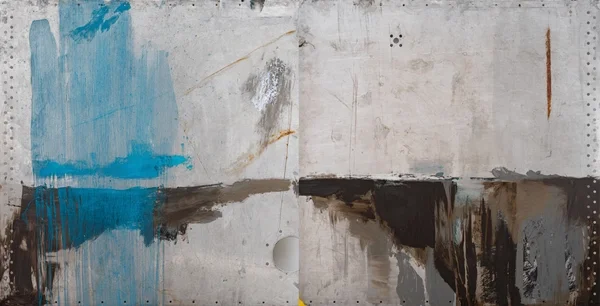
Marta Katavić, Dim Sun, 2024, oil on stainless steel, 2 x 59 x 59 in | 2 x 150 x 150 cm

Croatian artist Marta Katavić participated in Situacija: Salon mladih pt. 2, one of three exhibition programs presented as part of the 38th Youth Salon in Zagreb. Organized by the Croatian Association of Fine Artists and curated by Antun Sekulić, the program brought together 29 emerging artists across the Academy of Fine Arts in Zagreb, Galerija Kamba, Studio-galerija Klet, and the Autonomous Cultural Center Attack from September 8 to 24, 2026. 

The Youth Salon is Croatia’s longest-running and largest national exhibition platform dedicated to visual artists under the age of 35. This edition of Situacija reconsidered conventional exhibition formats by presenting works in temporary structures conceived as spaces for encounter, performance, and artistic production. Extending beyond traditional gallery settings, the program explored how shifts in location and modes of display might reshape the relationships between artworks, artists, audiences, and the city. 

Chiao-Han Chueh Presents New Residency Project at 18th Street Arts Center

Chiao-Han Chueh at 18th street arts center. courtesy of the artist.

Germany-based, Taiwanese artist Chiao-Han Chueh has begun a residency program at 18th Street Arts Center where she continues to develop painting as a system of action and perception. 
 
Chueh’s practice reflects upon her experience growing up in Taiwan and living in the West as an Asian woman, contesting normative gender constraints of women’s bodies by portraying primarily nude female figures engaging in unbridled behavior within fantastical spaces. Her approach to oil painting is both influenced both by Western academia and Chinese calligraphy and ink painting, therefore showing a convergence of her personal experience and aesthetics from diverse artistic traditions. 
 
During the residency, Chueh extends her research into medical imaging systems, including X-rays, anatomical diagrams, and spectral visualization, while further considering the potential of color as a visual language. Medical imagery is not treated here as a direct subject for representation, but is transformed through its blurred forms, heightened colors, and almost visceral visual intensity into a painterly grammar shaped by pressure, speed, material constraints, and bodily perception. 
 
Responding to the image-saturated visual environment of Los Angeles, the residency project examines how embodied experience, personal memory, and mediated images of the body may enter the work as perceptual structures rather than narrative themes. 

En-Man Chang Featured in the 25th Biennale of Sydney

Installation view of rememory, photo courtesy of the artist

Taiwanese artist En-Man Chang has been invited to participate in the 25th Biennale of Sydney, taking place from March 14 to June 14, 2026. Her presentation continues her sustained inquiry into colonial history, memory, migration, and Indigenous cultural regeneration. 

Curated by Hoor Al-Qasimi, the 25th Biennale of Sydney is titled Rememory, a theme that points to the revisiting, reconstruction, and reclaiming of histories that have been erased, suppressed, or forgotten. Through this curatorial framework, the Biennale understands memory as an ongoing cultural act, while considering how art can reopen the complex relationships carried by colonial history, local narratives, and lived experience. 

Born in Taitung and currently based in Taipei, En-Man Chang works across moving image, photography, installation, and collaborative practice. As an artist of mixed Indigenous heritage, Chang’s practice is rooted in her lived experience and cultural inheritance, and has long examined how Indigenous peoples in Taiwan negotiate shifting sociocultural landscapes and living conditions under modernization and urbanization. By excavating lost histories and narratives, she reconsiders the connections between personal experience, collective memory, and the wider world, while demonstrating the transformative potential of art. 

For the 25th Biennale of Sydney, Chang’s presentation continues the trajectory of her Snail Paradise series. Through moving image and installation, the work explores shared colonial experiences between Australia and Taiwan, as well as the possibility of Indigenous cultural regeneration after historical rupture. Interweaving personal memory, transregional migration, and ecological narratives, the work responds to the Biennale’s theme of Rememory and its questions of historical revisitation and cultural regeneration. 

The participation of Taiwanese artists in this edition is commissioned by the Biennale of Sydney and supported by the Taipei Economic and Cultural Office, Sydney. With support from Taiwan’s Ministry of Culture, the Taipei Economic and Cultural Office, Sydney has collaborated with the Biennale of Sydney to support the participation of four Taiwanese artists in this edition, presenting cultural narratives and historical reflections from Taiwan’s contemporary art in an international context. Through this presentation, Chang’s practice further brings the relationships between Taiwanese Indigenous culture, colonial memory, and contemporary artistic practice into broader international dialogue. 

Exhibition Information: 25th Biennale of Sydney, Rememory 
Venues: Various venues across Sydney, Australia 
Dates: March 14 – June 14, 2026 
Commissioned by: Biennale of Sydney 

En-Man Chang Participates in the Taipei Touring Exhibition “Breaking Ground: Art and Activism in Indigenous Taiwan”

Installation view of breaking ground: Art and activism in indigenous taiwan, photo courtesy of the artist.

Nunu Fine Art is pleased to share recent exhibition news of artist Chang En-Man, who is participating in the group exhibition Breaking Ground: Art and Activism in Indigenous Taiwan, on view at the Ministry of Culture Gallery from April 23 to August 21, 2026. Previously presented at the IAIA Museum of Contemporary Native Arts (MoCNA) in Santa Fe, New Mexico, the exhibition returns to Taiwan this year with a Taipei touring presentation. 

Co-organized by the National Taiwan Museum of Fine Arts and the IAIA Museum of Contemporary Native Arts, Breaking Ground: Art and Activism in Indigenous Taiwan focuses on activist practices in contemporary Indigenous art, exploring questions of coloniality, Indigeneity, identity, belief, land, survival, and social justice. Bringing together ten Taiwanese Indigenous artists and artist collectives, the exhibition presents how Indigenous artistic practices respond to colonial histories, global Indigenous issues, and contemporary social realities. 

As one of the key participating artists in the exhibition, Chang En-Man has long explored the living conditions and cultural memory of Indigenous peoples in Taiwan under the intertwined forces of modernization, urbanization, and colonial history. Working across moving image, photography, installation, and collaborative practice, Chang draws from her own lived experience and Indigenous background to uncover overlooked or lost historical narratives, connecting personal experience, local memory, species migration, and broader global Indigenous issues. 

Chang’s featured work, Snail Paradise Concerto – Chapter of Santa Fe (2025), continues her long-term Snail Paradise series. The version presented at the Ministry of Culture Gallery is made with paper mulberry bark, document transfer, and embroidery, measuring 400 × 100 × 50 cm, and was commissioned by the National Taiwan Museum of Fine Arts. Taking the African giant snail—originating from East Africa and listed among the world’s top 100 invasive species—as a medium through which to explore the world, the work interweaves species dispersion, human migration, and colonial history into a complex network. 

In Chang’s practice, the dissolving relationship between Taiwan-native paper mulberry and snail mucus points to the routes and traces left by the movements of plants, animals, and humans. Within these intersecting paths, the artist wanders in a mode akin to bardic storytelling and concerto, searching for voices that carry colonial trauma and historical remnants. Through Snail Paradise Concerto – Chapter of Santa Fe, Chang further places the movement of natural species alongside the historical experiences of Indigenous peoples, showing how Indigenous art may become a medium for responding to colonial realities, reconstructing cultural memory, and proposing forms of social action. 

Exhibition Information: Breaking Ground: Art and Activism in Indigenous Taiwan 
Venue: Ministry of Culture Gallery 
Address: 1F, South Building, Xinzhuang Joint Office Tower, No. 439, Zhongping Road, Xinzhuang District, New Taipei City 242030, Taiwan 
Dates: April 23 – August 21, 2026 
Caroline Monnet Presents “Threads That Remember” at the 2026 State of Fashion Biennale

Caroline Monnet, Threads That Remember, 2026, floor and roof underlayment, waterproofing and insulating membranes, sill gasket, polyethylene, tarpaulin, thread, grommets, 95⅞ x 168 in | 243.8 x 426.7 cm photo coutesy of the artist.

Nunu Fine Art is pleased to share that Canadian artist Caroline Monnet was invited by the Wereldmuseum (National Museum of World Culture) to undertake a residency in Nijmegen, the Netherlands. The residency brought Monnet’s Anishinaabe-French background and Indigenous methodologies into dialogue with fashion, material culture, local communities, and contemporary systems shaped by colonial histories.  

As an outcome of the residency, Monnet presents Threads That Remember (2026), a newly commissioned work now on view at Museum Arnhem as part of the 2026 State of Fashion Biennale, Available to Promise, from May 14 to June 28, 2026. Using industrial materials such as floor and roof underlayment, waterproofing and insulating membranes, polyethylene, tarpaulin, thread, and grommets, the large-scale work takes the shape of a traditional dress pattern, presented flat against the wall. 

While its display recalls museum modes of presentation, the form refers to a garment normally worn and animated through movement. In Anishinaabe contexts, the dress is associated with identity, cultural continuity, and relationships to land and community. Rather than replicating tradition, Monnet reinterprets it through contemporary materials, foregrounding Indigenous experience today and affirming cultural resilience across land, memory, and community. 

Threads That Remember was commissioned by Wereldmuseum, Nijmegen, in collaboration with the State of Fashion Biennale, Arnhem. 

Mia Westerlund Roosen’s "Ray IV" acquired by the Wright Museum of Art at Beloit College

Mia Westerlund Roosen, Ray IV, 1985, bronze and concrete, 40 x 40 x 34 in | 101.6 x 101.6 x 86.4 cm. Image courtesy of the artist studio.

Nunu Fine Art is honored to announce that Ray IV by American artist Mia Westerlund Roosen has officially entered the permanent collection of the Wright Museum of Art at Beloit College, where it will be installed in front of the museum’s main entrance as a new public art landmark. 

Born in New York in 1942, Westerlund Roosen has remained an active figure in American contemporary sculpture since the 1970s. Working across sculpture, painting, and public art, she explores the relationship between materiality, scale, and bodily perception. While her work developed within the contexts of Minimalism and Post-Minimalism, it does not fully adhere to their austere and depersonalized formal language. Instead, through the weight, texture, and structure of materials such as concrete and metal, her work reintroduces corporeality, tactility, and material experience. The acquisition of Ray IV not only marks an important milestone in the artist’s career but also adds a significant chapter to the museum’s collection of contemporary sculpture. 

Caroline Monnet’s "Kingdom" (2026) acquired by the Dallas Museum of Art

Caroline Monnet, "Kingdom," 2026, roof underlayment, polyester thread, 28 ¼ x 57 ½ in. | 71.8 x 146.1 cm

We are pleased to report the acquisition of Caroline Monnet’s "Kingdom" (2026) by the Dallas Museum of Art. Each year since 2016, the DMA selects works to enter the museum’s collection through the Dallas Art Fair’s Foundation Art Acquisition Fund. This year, "Kingdom" (2026) was announced on the opening day of DAF by Dr. Vivian Li, DMA Lupe Murchison Curator of Contemporary Art alongside works by Hasani Sahlehe, Gloria Klein, Raymond Saunders, and Nicole Eisenman.

"Kingdom" (2026) is an abstract triptych constructed of polyester thread on roof underlayment material. In using construction material, the artist references the housing crisis’ disproportionate effects on Indigenous populations in Canada, a social issue often discussed in her work. Caroline Monnet lives and works in Mooniyang/Montreal and originally hails from Canada’s Outaouais region. She is of Anishinaabe and French background and uses her work to communicate Indigenous identity through complex cultural narratives and to grapple with legacies of colonialism.

Ana Teresa Barboza’s work featured in “WE Are Becoming,” C-LAB (Taiwan Contemporary Culture Lab)’s 2026 annual exhibition

installation view of WE are becoming at c-lab, Courtesy of C-LAB. Photo by dulub studio.

Nunu Fine Art is pleased to share that works by Peruvian artist Ana Teresa Barboza are featured in WE Are Becoming, C-LAB (Taiwan Contemporary Culture Lab)’s 2026 annual exhibition, opening on May 8, 2026.

Centering on the concept of “becoming,” the exhibition approaches culture not as a fixed identity but as an evolving condition shaped through practice, action, and imagination. Bringing together works by artists from diverse cultural and material backgrounds, the exhibition reconsiders how cultural imaginaries may be continuously rearticulated within a contemporary context marked by multiple languages, communities, and technologies.

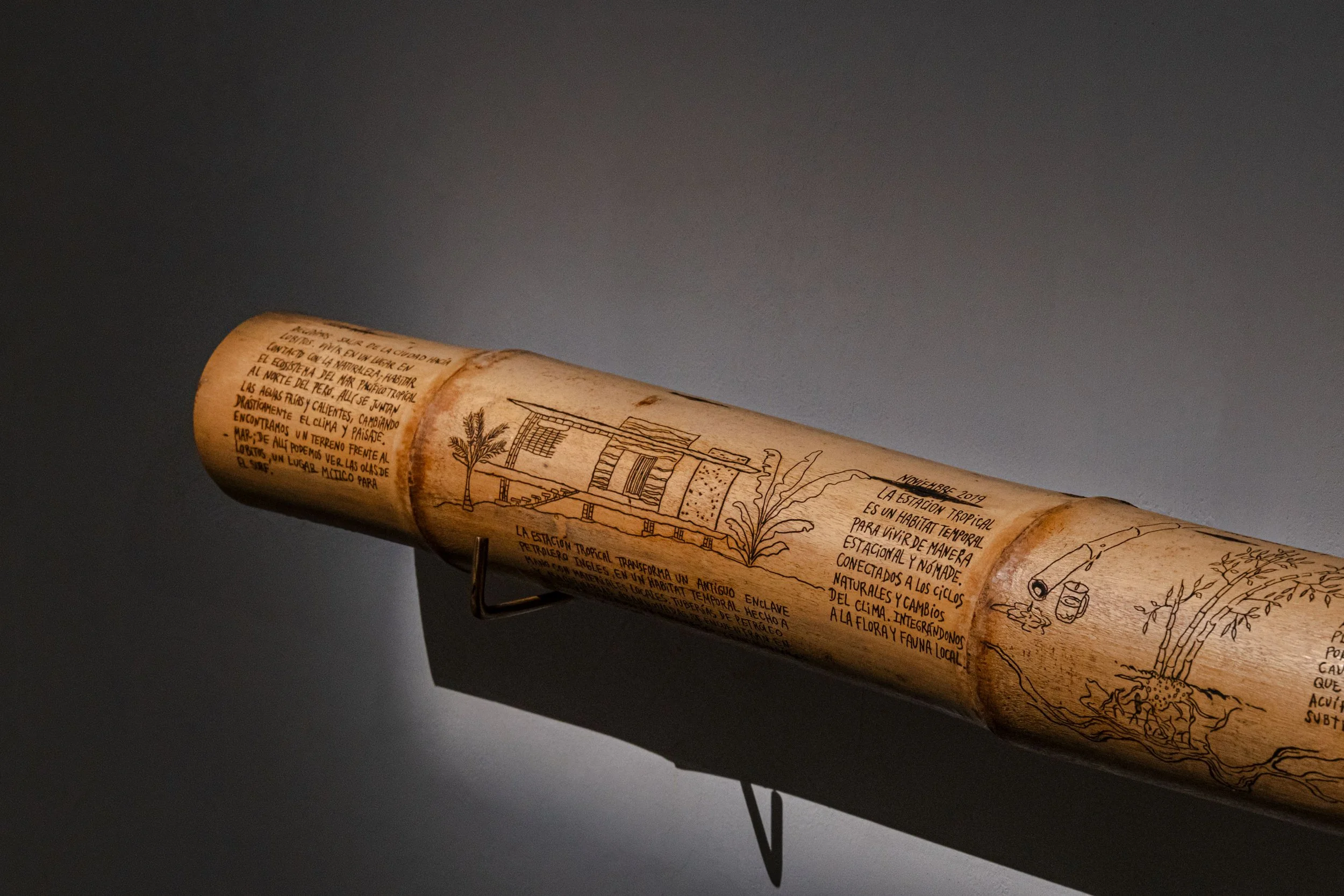
The presentation includes selections from Barboza’s long-term project Tropical Station: A Common Habitat, co-created with Rafael Freyre, and a group of textile and ceramic works developed through her research with plant-based dyes and weaving techniques. As an ongoing interdisciplinary project, Tropical Station: A Common Habitat brings together vernacular architectural knowledge from Peru’s northern coastal region, traditional craft practices, and contemporary digital technologies to explore new possibilities for coexistence between humans and ecological systems in a post-urban condition.

Extending this ecological line of inquiry, Barboza’s textile and ceramic works emerge from her field research in the dry forests of Piura, where she collaborates with local artisans and works with native plant dyes. Through weaving, natural pigments, and material processes, her practice translates climatic cycles, memories of rainwater, and local knowledge into a visual language that reflects the ongoing entanglement of landscape, memory, and embodied experience—resonating with the exhibition’s broader inquiry into how culture is continuously reshaped through lived practice.

Barboza’s practice proposes a way of reading grounded in process, positioning the works as an entry point for engaging with contemporary experience. We warmly invite audiences to encounter Barboza’s work as part of this unfolding dialogue between ecology, material practice, and collective futures.

WE Are Becoming
Dates: May 8 – August 16, 2026
Venue: C-LAB (Taiwan Contemporary Culture Lab), Taipei
Opening hours: Tuesday –Sunday, 12:00 – 19:00 (Closed on Mondays)

Guan-Hong Lu’s work featured in "Material Extensions" at the Taipei Fine Arts Museum (TFAM)

Installation view of material Extensions at Taipei fine art museum, photo courtesy of Taipei fine art museum.

We are honored to share the latest news of artist Lu Guan-Hong, whose work is featured in "Material Extensions" at the Taipei Fine Arts Museum (TFAM), widely recognized as the most iconic institution of contemporary art in Taiwan. 

Lu Guan-Hong’s practice excels at embedding playful irony within blurred narrative structures. By creating absurd juxtapositions of scenes and figures, he constructs a calm yet tense sense of humor. His work captures the fissures within everyday order, transforming familiar visual experiences into psychological fields of uncertainty. 

In "Material Extensions," Lu further explores how "matter" inversely intervenes and reshapes human lifestyles. Within a contemporary society defined by consumerism and symbolism, he uses a unique visual language to deconstruct the symbiotic relationship between humans and objects, production and consumption. He transforms the flow of materials into a black-humorist inquiry into our current state of existence. 


Material Extensions 
Venue: Galleries 2A & 2B, Taipei Fine Arts Museum  
Dates: May 1 – August 16, 2026

En-Man Chang’s Snail Paradise acquired by the Dallas Museum of Art

Installation view of Mapping Snail at Nunu Fine Art New York. Photo by MarTin Seck

Nunu Fine Art is pleased to congratulate Taiwanese artist En-Man Chang on the acquisition of her work, Snail Paradise, by the Dallas Museum of Art. This acquisition highlights the growing international recognition of Chang’s research-driven practice and her distinctive engagement with history, ecology, and cultural memory. 

Chang’s work often examines the entangled relationships between historical narratives, species migration, and cultural identity. Working across embroidery, video, and installation, she draws on detailed research to transform seemingly modest subjects into powerful lenses through which to reconsider colonial histories, global circulation, and Indigenous knowledge systems. 

Snail Paradise draws from the global dispersal history of the Giant African Land Snail. Native to East Africa, the species spread through colonial trade routes and became one of the world’s 100 most invasive species. In 1933, during the Japanese colonial period, officials introduced the snail from Singapore to Taiwan for food cultivation, its migration routes mirroring the cartographies of imperial expansion. Chang’s embroidered works incorporate plants associated with snail cuisine, rendered in cross-stitch as a way of imagining the preservation of cultural “traditions” for future generations. Cross-stitch is a traditional embroidery technique among some Indigenous Taiwanese communities, often featuring geometric and symmetrical patterns that signify social status, ancestry, and spiritual beliefs.  

The acquisition of Snail Paradise by the Dallas Museum of Art not only affirms Chang’s thoughtful translation of historical and cultural research into contemporary artistic language but also underscores her significant position within the international contemporary art landscape. 

Marta Katavić Participates in "8th Biennial of Painting" at Varaždin City Museum

Installation view of the 8th Biennial of painting. Courtesy of the arist

We are honored to congratulate Marta Katavić on her participation in the 8th Biennial of Painting at Varaždin City Museum. The exhibition is on view until 16 February 2026.

The Biennial of Painting at the Varaždin City Museum is one of Croatia's most significant national cultural events. It aims to highlight the potential and achievements of contemporary Croatian art while contributing to the formation of an important and representative body of national cultural heritage. This year, the biennial brings together works by around 70 Croatian artists, spanning from traditional painting to experimental contemporary practices. The exhibition offers viewers an intergenerational encounter and dialogue grounded in Croatian culture.

Marta Katayić (b. 2000) was born in Kriřeyci, Croatia. Working primarily with oil paint, stainless steel, and metal foil, she combines expressive brushwork with rich color to deliberately blur facial features and outlines, creating a visual tension that is at once figurative and enigmatic. She is an emerging contemporary artist whose work has begun to attract international interest.
8th Biennial of Painting

|Duration: December 3, 2025 - February 16, 2026
|Venue: Varaždin City Museum
|Opening Hours: Tue-Fri 9 AM-5 PM / Sat-Sun 1 PM-9 PM, closed on Monday and public holidays.

Mimian Hsu’s No. 1674 Sección Administrativa acquired by The Phillips Collection

Mimian Hsu, No. 1674 Sección Administrativa, 2007, Embroidered Antique Silk Bed Cover, Document from the National Archive of Costa Rica, 64 x 45 in | 162.6 x 114.3 cm 

Nunu Fine Art is pleased to congratulate artist Mimian Hsu on the acquisition of her work No. 1674 Sección Administrativa (2007) by the prestigious American institution The Phillips Collection. This acquisition marks another important milestone in Hsu’s longstanding artistic engagement with themes of migration history and identity. 

Mimian Hsu is a Costa Rican artist of Taiwanese descent whose practice is deeply informed by her personal experiences. Through a poetic and often non-representational visual language, her work explores cultural hybridity, migration, and questions of identity.  

The acquired work, No. 1674 Sección Administrativa, originates from the artist’s research into the history of Chinese immigration in Costa Rica. The piece draws from a historical document—a letter written in 1907 by two Chinese immigrants who, following the implementation of restrictive immigration policies, petitioned the government for permission to bring their wives and children to the country. Hsu embroidered the full text of the letter in gold thread onto a traditional Chinese silk textile commonly used for newlywed bedsheets. The red fabric, symbolizing happiness and marriage, together with the gold thread, representing value and prestige, reinforces the cultural symbolism of the materials while amplifying the text’s themes of family reunification, fundamental rights, and human dignity. 

The acquisition of No. 1674 Sección Administrativa not only highlights Hsu’s significant contribution to contemporary dialogues on migration and cross-cultural histories, but also further affirms the international recognition of her artistic practice. 

Ishmael Randell-Weeks' work on view at Carpenter Center, Harvard University

Installation view of Signal and Strata. Courtesy of carpenter center, photo by julia featheringill

Nunu Fine Art is honored to announce and congratulate artist Ishmael Randall-Weeks on his participation in the group exhibition Signal and Strata, which opened on February 5 at the Carpenter Center for the Visual Arts at Harvard University. 

Signal and Strata brings together the practices of three Peruvian artists — Elena Damiani, Ximena Garrido-Lecca, and Ishmael Randall-Weeks. Through works that are materially rich, architecturally inflected, and frequently referencing pre-colonial forms, the three artists explore the complex and intertwined relationships between land, history, and resource extraction. By placing their practices in dialogue, the exhibition further addresses issues of environmental change and cultural displacement, inviting viewers to consider how systems of power and belief are constructed, eroded, and reimagined within and through material. 

Randall-Weeks is represented in the exhibition by key works including Círculo concreto and Código Atemporal #83. Composed of found and reclaimed materials such as copper, cement, brick, rubber, and soil, these works are reconstituted through a highly labor-intensive process into hybrid architectural forms. Through this practice, the artist gives embodied form to cycles of production and decay, while offering a critical reflection on narratives of progress, urbanization, global supply chains, and material culture.